
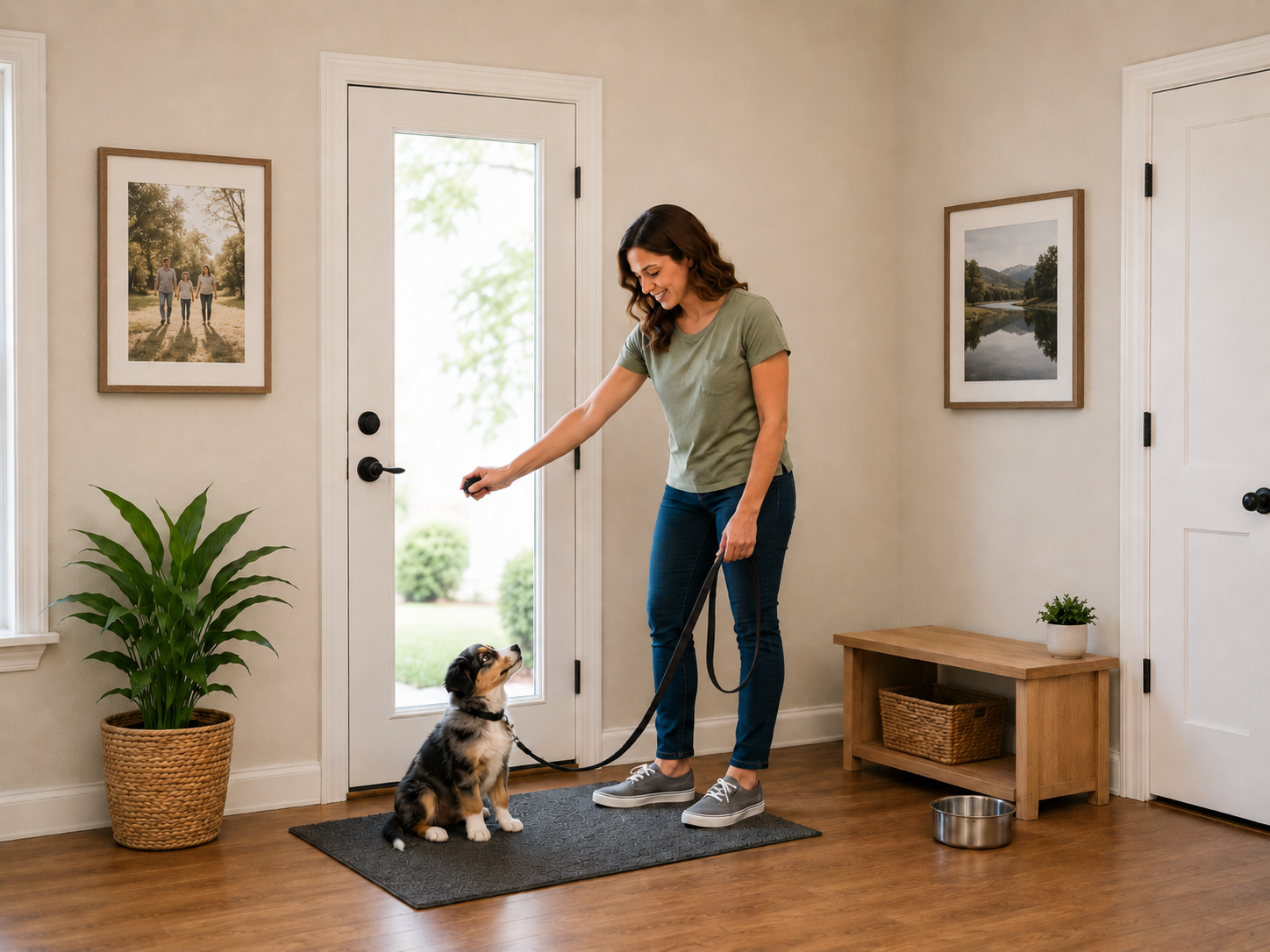
Puppy potty training can feel exhausting when you are cleaning up one accident after another. The good news is that it is not complicated once you understand the basic pattern. Puppies need timing, supervision, praise, patience, and a chance to succeed. Although it may feel like it, your puppy is not trying to ruin your carpet or test your sanity.
A young puppy has a small bladder, an immature digestive system, and very little experience with house rules. Your job is to make the right choice easy and the wrong choice less likely. That means taking your puppy out often, watching closely indoors, rewarding success right away, and cleaning accidents properly. With consistency, most puppies improve much faster than tired owners expect.
Why Puppy Potty Training Takes Time
Puppies do not arrive knowing that the living room rug is different from the grass outside. They learn through routine and repetition. When the same door, same potty area, same praise, and same schedule are repeated often enough, the pattern begins to make sense.
Accidents are part of the process, especially with very young puppies. A mistake does not mean your puppy is stubborn, spiteful, or impossible to train. It usually means the puppy was not taken out soon enough, was not supervised closely enough, or did not yet understand where to go. That is frustrating, but it is fixable.
Start With a Predictable Schedule
A schedule is one of the strongest tools in puppy potty training. Puppies usually need to go out after waking, eating, drinking, playing, chewing, and spending time in a crate. They also need to go first thing in the morning and last thing at night. The more predictable the routine, the easier it is for your puppy to learn.
Take your puppy to the same general potty area each time if possible. Use a simple phrase such as “go potty” or “outside” while she is in the right place. Keep your voice calm and the trip focused. This is not the time for a long walk, play session, or neighborhood visit.
Feeding on a schedule can also help. Free-feeding makes it harder to predict when your puppy will need to eliminate. Regular meals, age-appropriate food, and consistent potty trips make the day easier to manage. For more help with meal timing and puppy nutrition, see our guide to feeding puppies.
Take Your Puppy Out at the Right Times
Timing is everything with a young puppy. Many puppies need a potty break immediately after waking from a nap. They may also need to go within a short time after eating or drinking. A puppy who has been playing hard may suddenly stop, sniff, circle, or wander away because she needs to eliminate.
Watch for those early warning signs. Sniffing the floor, circling, whining, pacing, squatting, or heading toward a previous accident spot can all mean it is time to move quickly. Calmly take your puppy outside or to the approved potty area. If she finishes there, praise her right away.
A common guideline is that many puppies can hold urine for about one hour per month of age, plus one additional hour, but that is only a rough estimate. Individual puppies vary, and very young puppies often need more frequent breaks. Do not expect a puppy to hold it for a full workday. If your schedule keeps you away too long, arrange help from a family member, neighbor, sitter, or dog walker.
Use Praise the Moment Your Puppy Gets It Right
Praise works best when it happens immediately. If your puppy goes in the right place, praise her while she is still there or right after she finishes. A few small puppy training treats can help, but they should be tiny, easy to digest, and given quickly. The goal is to help her connect the reward with the correct behavior.
Keep your praise cheerful but not so exciting that it interrupts the job. Some puppies get distracted easily. Let your puppy finish before turning the moment into a celebration. Once she is done, reward her and then enjoy a little play or affection.
Puppy sad about having an “accident”
Do not scold a puppy for accidents. Scolding can make puppies afraid to eliminate in front of you, which may lead them to hide behind furniture or sneak into another room. Our article on what scolding does to your dog explains why punishment can damage trust and make training harder.
Crate Training Can Help When Used Correctly
A crate can be helpful for puppy potty training when it is used correctly. Many dogs prefer not to soil the place where they sleep, so a properly sized puppy crate can encourage a puppy to wait for a potty break. The crate should be large enough for your puppy to stand, turn around, and lie down comfortably. It should not be so large that she can use one corner as a bathroom and sleep in another.
The crate should never be used as punishment. Make it comfortable with safe bedding, and introduce it gradually with calm praise. Some puppies settle in better when the crate is near the family at first, especially at night. Others may need short daytime practice sessions before they can rest calmly in it.
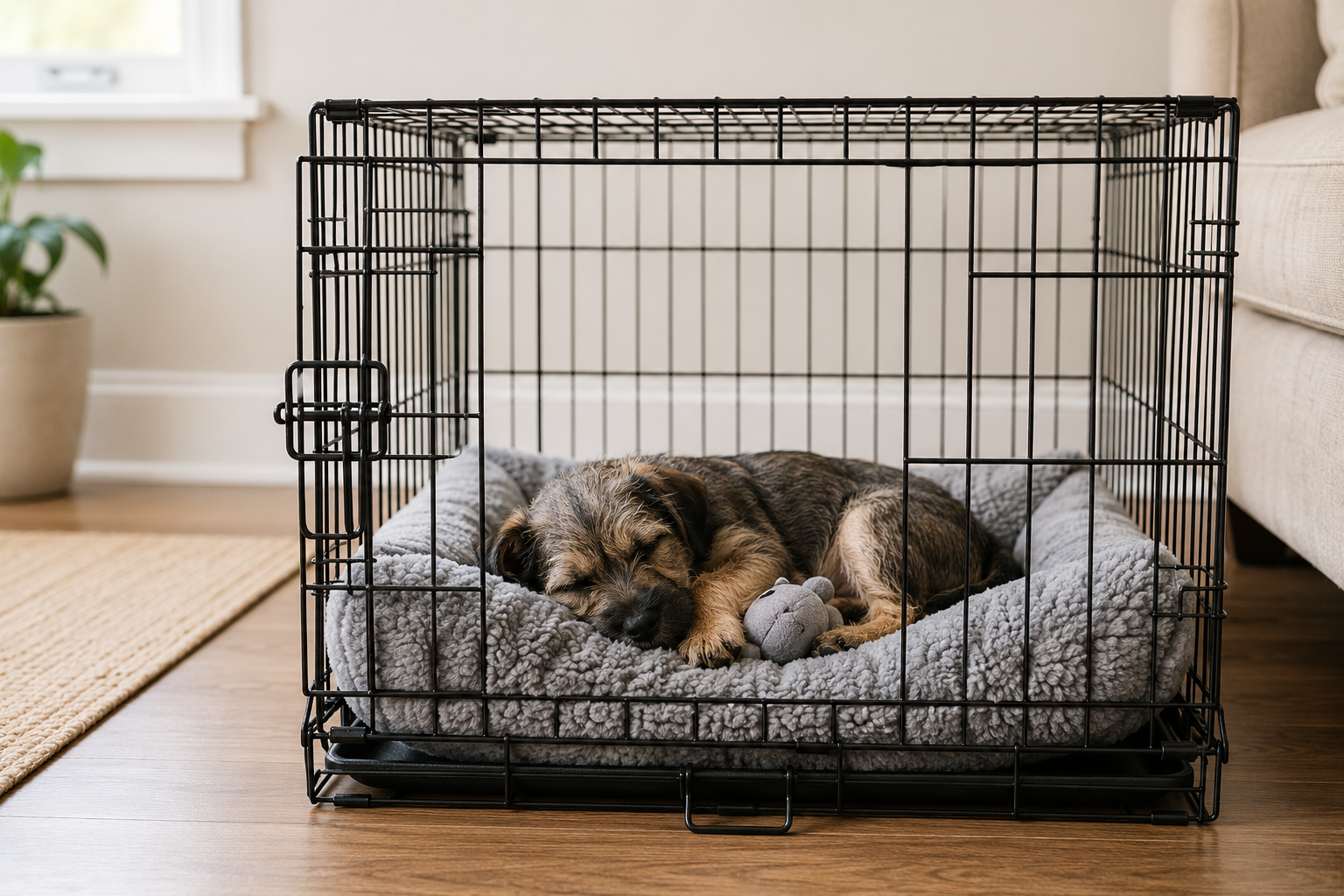
A washable crate pad or washable blanket can make cleanup easier if an accident happens. Choose bedding that is safe for your puppy and easy to launder. A crate divider can also be useful if your puppy will grow into a larger crate. If your puppy repeatedly soils the crate, do not ignore it. The crate may be too large, the schedule may be unrealistic, or the puppy may need a veterinary check.
When Puppy Pads May Be Useful
Puppy pads can help in certain situations. They may be useful for apartment living, harsh weather, very young puppies, illness, mobility problems, or times when no one can get the puppy outside often enough. They give the puppy an approved indoor place to go instead of leaving the choice up to her.
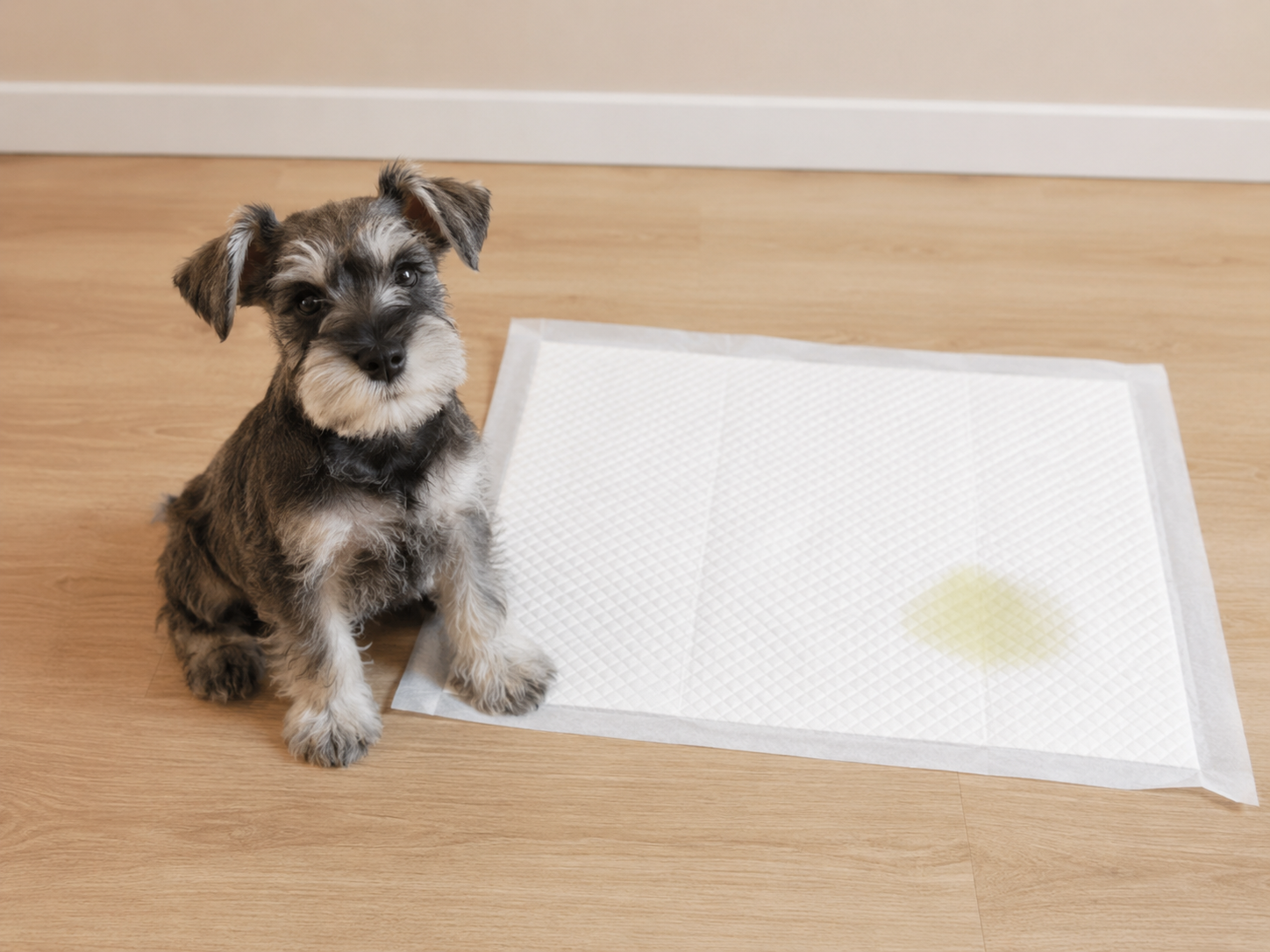 However, puppy pads can also slow outdoor training if the plan is not clear. Some puppies learn that soft square surfaces are acceptable, then become confused by rugs, bath mats, or laundry on the floor. If your final goal is outdoor potty training, use pads carefully and gradually move the routine toward the door or outdoor area when your puppy is ready.
Disposable puppy pads, washable puppy pads, or an indoor potty tray may be worth considering for homes that truly need an indoor option. Washable pads may cost more upfront but can be reused. Disposable pads may be more convenient for short-term use. The most important point is consistency, because switching between too many potty locations can make training harder.
Supervision Prevents Many Accidents
Most puppy accidents happen when no one is paying close attention. A puppy who has freedom to wander through the house will almost always find a quiet place to make a mistake. Supervision allows you to catch the early signs and get her to the right place before it is too late.
Keep your puppy in the same room with you when she is loose. Baby gates, exercise pens, leashes, and closed doors can help limit access to the whole house. A smaller supervised area is much easier for a puppy to understand. As she becomes reliable, you can slowly give her more freedom.
If you cannot supervise, use a safe crate, puppy pen, or gated area. This is not about being harsh. It is about preventing habits that will be harder to undo later. Every successful potty trip teaches your puppy what you want, while every unnoticed accident teaches her that indoor potty spots are available.
Clean Accidents the Right Way
Accidents should be cleaned calmly and thoroughly. Do not rub your puppy’s nose in the mess, yell, or drag her back to the spot. That teaches fear, not understanding. Instead, clean the area well and improve your supervision or schedule.
An enzymatic cleaner is one of the most useful puppy potty training supplies you can keep on hand. These cleaners are designed to break down urine and stool odors that puppies may still smell even after the surface looks clean. If the odor remains, your puppy may return to the same spot because it smells like a bathroom to her.
Blot liquid accidents before applying cleaner, and follow the product directions carefully. Avoid ammonia-based cleaners on urine spots because they can smell similar to urine to a dog. Keep washable cleaning cloths or paper towels nearby so cleanup can happen quickly. Wash soiled bedding, towels, and blankets promptly. A good cleanup routine protects your home and helps the training plan work better.
Feeding and Water Timing Can Help
Food and water timing can affect potty training. Puppies need access to fresh water, but the timing of meals and big drinks can help you predict potty breaks. A puppy who eats on a schedule is usually easier to read than one who grazes all day. Ask your veterinarian what feeding schedule is appropriate for your puppy’s age, size, and health.
Do not restrict water in a way that risks dehydration. Instead, pay attention to patterns. If your puppy drinks a large amount after evening play, plan one more potty trip before bedtime. If she has repeated nighttime accidents, talk with your veterinarian before making major changes.
Food quality can also affect stool consistency and frequency. A puppy with loose stool or frequent diarrhea may not be able to wait, no matter how good your training plan is. Sudden diet changes, rich treats, table scraps, parasites, or illness can all interfere with progress. Consistent feeding makes consistent potty training much easier.
How Long Can a Puppy Hold It?
The “one hour per month of age plus one” idea is a common starting point, but it is not a guarantee. A three-month-old puppy may manage about four hours in some situations, but that does not mean every three-month-old puppy should be expected to wait that long every day. Play, stress, excitement, illness, and recent drinking can shorten the time quickly.
Nighttime may be different from daytime because puppies are less active while sleeping. Even then, very young puppies may need nighttime potty breaks. Keep those trips quiet and boring. Take the puppy out, let her eliminate, praise gently, and return her to bed.
As your puppy grows, bladder control usually improves. Progress may come in small steps rather than one dramatic change. If your puppy is improving week by week, you are likely on the right track. If accidents are increasing or your puppy seems unable to hold urine at all, call your veterinarian.
Common Puppy Potty Training Problems
Some puppies do well for several days and then suddenly have accidents again. That does not always mean you failed. Schedule changes, excitement, visitors, travel, illness, weather, or too much freedom too soon can cause setbacks. Go back to a tighter routine for a few days and rebuild success.
Some puppies go outside, come back in, and then have an accident. This often happens because the outside trip was too exciting or too short. Give your puppy enough time to focus before returning indoors. If she does not go, bring her back inside under close supervision and try again soon.
Other puppies hide to eliminate. This often happens when they have been punished for accidents. They may have learned that people become scary when they see potty behavior. The solution is more supervision, calm handling, better timing, and generous praise for going in the right place.
When to Call the Veterinarian
Most potty training problems are training problems, but not all of them are. Call your veterinarian if your puppy urinates very frequently, strains, cries, has blood in the urine, has diarrhea, vomits, drinks excessively, seems painful, or suddenly regresses after doing well. Medical issues can make housetraining much harder or impossible until the health problem is treated.
You should also ask for help if your puppy seems unable to control elimination despite a consistent schedule. Parasites, urinary tract issues, digestive problems, anxiety, and other conditions can affect progress. A veterinary check can save time and protect your puppy’s health.
If your veterinarian rules out a medical problem and training is still difficult, a qualified trainer or behavior professional may help. Choose someone who uses humane, reward-based methods. Potty training should build trust, not fear.
Helpful Puppy Potty Training Supplies
The right supplies will not train your puppy for you, but they can make the process easier. A properly sized crate, washable crate pad, baby gate, leash, small training treats, treat pouch, poop bags, puppy pads, and enzymatic cleaner can all be useful. Choose products that fit your puppy’s size, your home, and your training plan.
A treat pouch can be especially helpful because rewards need to happen quickly. If the treat is across the room, your puppy may not connect the reward with going in the right place. Poop bags are also worth keeping near the door, in your car, and with your leash so outdoor potty trips stay simple.
Do not buy every product on the shelf just because it is labeled for puppies.
Start with the basics and add only what solves a real problem in your home. A simple, consistent plan usually works better than a pile of supplies without a routine. I have provided links for several items because each situation in different and only you will know what your needs will be. It is highly unlikely that you will need all of them.
A Final Word for Tired Puppy Owners
Puppy potty training can be tiring, messy, and inconvenient. It can also improve faster than it feels in the middle of a frustrating week. Your puppy is learning a completely new household rule while her body is still developing. That takes repetition and patience.
Set your puppy up for success instead of waiting for mistakes. Take her out often, praise quickly, supervise closely, clean accidents thoroughly, and adjust the schedule when needed. Progress may not be perfect, but it should become more consistent over time.
One day, you will realize you have not cleaned up an accident in a while. That is the reward for all those early trips outside, all those tiny treats, and all that patient repetition. Until then, keep going. Your puppy is learning, and so are you.
Sources and Helpful Resources
- American Kennel Club: How to potty train a puppy
- American Kennel Club: Setting schedules and routines for a new puppy
- American Kennel Club: Crate training guidance
- VCA Animal Hospitals: House training for puppies and dogs
- American Humane: Housetraining puppies and dogs
- Humane Society of Western Montana: Puppy housetraining resource and accident cleanup
Editor’s Note: This article was updated and expanded for clarity, accuracy, and reader usefulness. It is not a substitute for veterinary care. If your puppy has frequent accidents despite consistent training, strains to urinate, has diarrhea, seems painful, drinks excessively, or suddenly regresses, contact your veterinarian.
Amazon Affiliate Disclosure: As an Amazon Associate, Happy Mutt may earn from qualifying purchases. This does not change the price you pay.
Photo Credit: All images © Sloan Digital Publishing and licensed stock sources. Used with permission.


