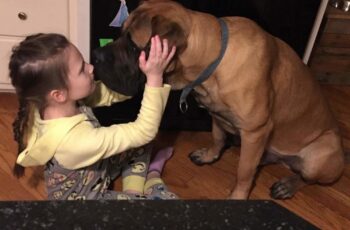
When I first ran across this short video clip of a darling little boy asking, “Can I Pet That Dog?”, it put a smile on my face. Then, another thought crossed my mind. How many of our readers actually ask that question before touching someone else’s dog. Do you?

Can I Pet That Dog Is A Vital Question And We All Should Ask It, Not Just Kids
I am sure you can think of many reasons to ask before petting someone else’s dog that is unknown to you. The issue may be with you, the dog, or the situation itself. If the person with the dog is a dog walker and not their owner, they might not know them well enough to predict the dog’s behavior.
What if the dog is afraid of all women or all men due to a past history of abuse? Maybe the dog is afraid of anyone wearing a hat or carrying an umbrella for the same reason. Some dogs love people but not other dogs so, if you are walking a dog or you smell like your dog at home, he may not be friendly with you.
What if the dog appears to be very friendly and encourages you to pet him with his wagging tail? Should you still ask before petting? Yes. Maybe, this dog has a seriously dysplastic hip and any pressure near his rump or hip is incredibly painful? Do you think knowing where to avoid petting him might prevent you from a protective nip?
A Couple of Solutions for People Failing to Ask The Question
The failure of many adult dog lovers to ask “Can I pet that dog” before doing so has caused enough problems that suggested solutions are available online. If you own a dog and wish to inform the public about the need to ask before petting unfamiliar dogs, here are a couple of suggestions.
A dog trainer, Tara Palardy, from Innisfall, Alberta, founded the Yellow Dog Project. This program was created to spread the word about dogs that need some breathing space when it comes to meeting new people. This simple solution is based on a special recognition marker. Tara hopes that the symbol, a yellow ribbon, will soon become an internationally recognized symbol.
Tara’s Yellow Dog Project encourages owners to tie a yellow ribbon to their dog’s leash. The yellow ribbon is to signal to others that your dog is being trained to deal with space troubles. By taking obvious responsibility for the actions of your dog you can cut down the risk of someone being injured and your dog being traumatized as well. Also, by notifying others with a known and visible notice, you are giving them the opportunity to avoid an unpleasant altercation.
Another option comes from the Friendly Dog Company. They make a variety of harnesses and leashes. You can purchase them already labeled in quite a variety of ways. Whether nervous, friendly or blind, (for example) they have a product that labels your dog.
While I personally believe that it is far better when people simply ask before approaching or touching someone else’s dog, not all people will do so. Therefore, these labeled leashes and harnesses have a place in solving the problem and I am thankful for them.
Dogs May Be Family But They Are Still Dogs
Do not forget that while dogs have been domesticated for hundreds of years, and many of us feel as though they are members of our family, they are still dogs. We do our utmost to train our dogs and to keep others safe from any potential harm they might cause.
However, we must never forget that all dogs have something that might make them feel uneasy at best. If we did not raise them from puppyhood, we might not ever know what kinds of things in their past could cause a problem.
Thankfully, most of us have done a pretty good job of teaching our children to ask “Can I pet that dog? “ before approaching a strange dog. However, sometimes, adults forget to ask that vital question themselves.
We need to praise those children who do ask first and remind those who do not of how important it is for them to ask before petting. Furthermore, there’s nothing wrong with reminding adults to give your dog space when necessary. We all should remind people of all ages to ask permission before petting, an unknown dog.
They had just adopted a pup and it was bedtime for the kid who just wanted to “pet that dog”. Can’t you just feel his excitement?
You may find this article on introducing a new dog to your family, human and furry. https://excellentdogsclub.com/tips-on-how-to-introduce-a-new-dog-to-your-household-pack/
Thanks to the cute kid video that prompted this post.
Here is another article about asking to pet a dog. This time it is a service dog and the answer was “No”. The woman reacted in an unbelievable way. You need to see this.